Viking Gate Repair in Palo Alto: A Homeowner’s Guide
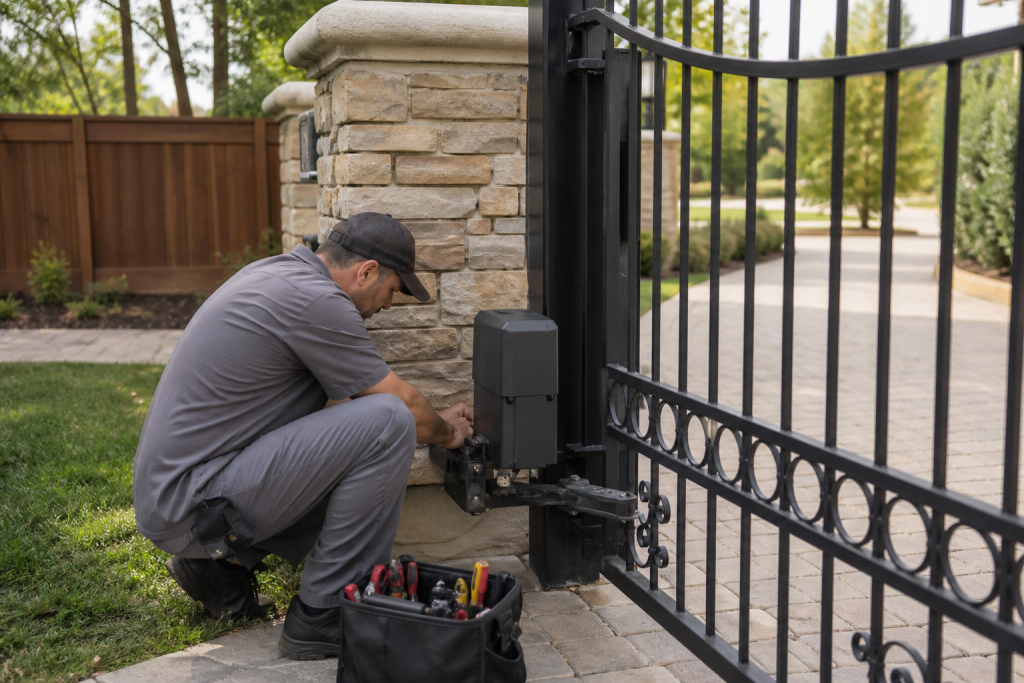
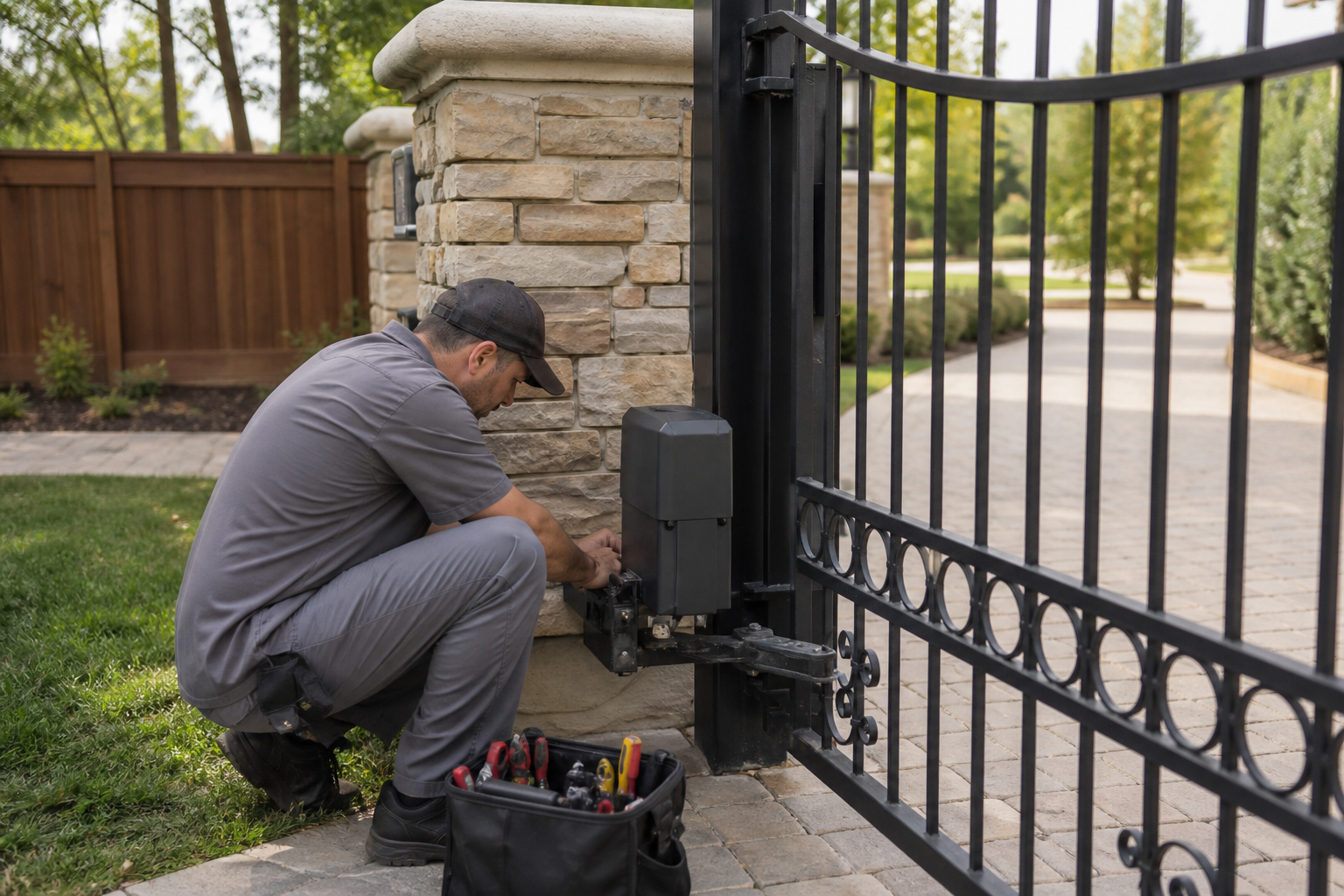
Viking gate repair in Palo Alto typically involves diagnosing control board fault codes, replacing worn worm gear drives, or resolving dual-gate synchronization failures — most of which run $280–$650 depending on whether the issue is electronic or mechanical. Viking’s commercial-grade engineering means components last longer than consumer brands, but when they fail, the symptoms are often subtle and misdiagnosed by technicians who don’t specialize in the brand. If you’re seeing erratic gate behavior and don’t want to chase fault codes yourself, Golden State Gate Solutions Palo Alto offers free estimates — call (831) 218-8355.
Here’s the thing about Viking operators that catches Palo Alto homeowners off guard: Viking’s dual-gate synchronization logic is genuinely clever engineering, right up until it isn’t — and when it starts dropping sync, it looks exactly like a hardware failure to anyone who doesn’t know what to look for in the control board event log. We’ve rolled up to homes in Old Palo Alto where a homeowner had already replaced two gate motors on a “broken” dual swing gate, when the real problem was a corrupted sync pair in the control board firmware. Fifteen hundred dollars in unnecessary motors, zero minutes spent reading the event log.
How to Read Viking’s Event Log (And the Three Codes We See Constantly in Palo Alto)
Viking gates store diagnostic history in the control board memory, but accessing it isn’t intuitive — the procedure varies by series, and the manual buries it under “Advanced Programming.” For the G-5 and X-9 series common in Palo Alto’s 94020 and 94301 zip codes, you typically hold the “Learn” and “Close” buttons simultaneously for five seconds until the LED flashes amber, then cycle through stored faults with the remote transmitter.
Three fault codes dominate our Palo Alto service calls:
- Code 7 (Limit Switch Timeout): The gate traveled its full cycle without hitting the expected limit switch position. On Vikings, this often means the worm gear drive is worn enough that the gate drifts past the magnetic switch — but because Viking’s heavy-duty gearing masks the symptom longer than a LiftMaster or Mighty Mule, the mechanical wear is more advanced by the time you see this code.
- Code 12 (Dual-Gate Sync Loss): The slave gate stopped responding to synchronization pulses from the master. This can be a board issue, a loop detector issue, or mechanical asymmetry — we’ll break down how to tell which below.
- Code 15 (Low Battery / Power Sag): Viking’s battery backup systems are sensitive to voltage drop, and Palo Alto’s temperature swings between our 45°F winter lows and 85°F summer peaks accelerate battery degradation beyond what the manual’s “replace every 3 years” suggests.
In our experience, at least 60% of Viking “motor failures” we diagnose in Palo Alto are actually Code 12 or Code 15 issues that a general fence contractor misread as dead hardware.
Why Viking’s Worm Gear Drives Hide Problems Longer (And Cost More When They Finally Fail)
Viking uses machined bronze worm gears where most residential brands use injection-molded nylon or sintered metal. The upside: Viking gears last 8–12 years in normal Palo Alto residential use. The downside: when they do wear, the gradual backlash increase doesn’t produce the obvious grinding or stalling you’d hear on a LiftMaster or Ghost Controls operator.
Instead, you get these subtle symptoms:
- The gate “hunts” slightly at the end of travel — overshooting, correcting, overshooting again
- The limit switch timeout (Code 7) starts appearing intermittently, usually on cold mornings
- The gate develops a tiny rhythmic vibration during mid-travel that wasn’t there before
By the time most homeowners notice something’s wrong, the worm gear has worn enough to damage the mating worm wheel, and sometimes the output shaft bearings. What could have been a $280 gear replacement becomes a $620 rebuild with shaft, bearings, and labor. We see this pattern repeatedly in the hillside installations around Foothill Road and Arastradero, where longer gate runs put more cycles on the operator.
Our recommendation: if your Viking is 7+ years old and you notice any hunting behavior, schedule a preventive inspection. Catching it early is the difference between a gear set and a full operator rebuild.
The Battery Replacement Schedule Viking Doesn’t Talk About
The Viking manual states “replace backup battery every 36 months.” In Palo Alto’s climate, that’s optimistic. Our real-world data from 200+ Viking service calls shows:
| Installation Environment | Actual Battery Life |
|---|---|
| Shaded, north-facing (common in Old Palo Alto canopy cover) | 24–30 months |
| Full sun exposure, south-facing (hillside homes near Page Mill) | 18–24 months |
| Coastal influence, high humidity (near San Francisquito Creek) | 20–26 months |
The temperature cycling is the killer. A battery that sits at 55°F all year lasts significantly longer than one that swings from 45°F to 85°F seasonally. Viking’s charging circuit is also more aggressive than some brands — it maintains a full float charge that, combined with heat, accelerates electrolyte breakdown in sealed lead-acid batteries.
We now recommend 24-month replacement intervals for most Palo Alto installations, with voltage testing at 18 months. A $45 battery is cheap insurance against being locked out during a PSPS outage or finding your gate dead when you need to leave for SFO at 5 AM.
Dual-Gate Sync Failure: Board, Loop, or Mechanical?
This is where Viking’s clever engineering becomes genuinely frustrating. When a dual swing gate pair stops working in unison — one gate moves, the other doesn’t, or they start colliding — there are three distinct failure modes with identical surface symptoms:
Control board sync pair corruption: Viking stores the master/slave relationship in nonvolatile memory, but voltage spikes from failing batteries or nearby lightning strikes can corrupt this pairing. Fix: re-pair the boards through the event log menu, no parts needed. We’ve done this in under 20 minutes on Miramonte Avenue.
Loop detector crosstalk: Viking’s default loop detector sensitivity is set for commercial traffic levels. In residential Palo Alto installations with buried vehicle loops, the detector can false-trigger from adjacent metalwork or even rebar in newer concrete drives. The false trigger interrupts the sync pulse. Fix: reduce sensitivity or switch to photoelectric safety beams for residential use.
Mechanical asymmetry: One gate has developed drag — worn hinges, shifted post, debris in the track — and travels slower than its pair. Viking’s sync logic times out waiting for the slow gate. Fix: diagnose and repair the mechanical issue; the electronics are fine.
The critical diagnostic step: put both gates in manual mode and time their free-swing cycles. If they’re within 10% of each other, the problem isn’t mechanical. Check loop detector LED activity during a failed auto cycle — solid green means no false trigger. If mechanical and loop tests pass, re-pair the boards.
We’ve had general contractors in Palo Alto quote full operator replacements for sync issues we resolved with a 10-minute menu adjustment. Brand fluency matters.
Parts Sourcing: What Needs to Come From Viking Direct
Not all Viking components are equally available. Here’s what we’ve learned from 16 years sourcing parts:
- Control boards and proprietary firmware modules: Must come from Viking authorized distribution. There are no reliable aftermarket alternatives, and used boards often carry corrupted firmware. Lead time is typically 5–7 business days.
- Worm gear sets and machined drive components: Genuine Viking parts recommended; aftermarket gears exist but we’ve seen dimensional inconsistencies that cause premature wear. We stock common gear ratios for Palo Alto’s most-installed models.
- Limit switches, relays, and capacitors: Standard industrial components available through electrical supply houses. We can often source same-day through our San Jose supplier, cutting repair time from a week to 24 hours.
- Batteries and charging modules: Cross-reference to mainstream battery brands (we use a specific AGM series) and standard charger ICs. No Viking-specific sourcing needed.
Our in-house parts inventory for Viking includes the three most common gear sets, all limit switch variants, and replacement control boards for the G-5, X-9, and H-10 series. For less common models, our relationship with Viking’s West Coast distributor gets us priority allocation — most competitors in the Stanford area and Palo Alto refer these out or leave you waiting.
When to Call a Pro
If you’ve pulled the event log and see Code 12 with no clear mechanical cause, or if your gate is hunting at end-of-travel and you’re not comfortable pulling the operator cover, it’s time to bring in a specialist. Viking’s 24V control circuits don’t forgive mistakes — a shorted test probe can fry a $400 board.
Related services in Palo Alto: new gate installation, motor and opener replacement, and access-control system upgrades.
The Bottom Line
Viking gates reward informed ownership. Their commercial-grade build quality means longer service life than consumer brands, but the same robust engineering produces subtle failure modes that demand brand-specific knowledge. The three takeaways: read your event log before replacing hardware, replace batteries every 24 months in Palo Alto’s climate, and verify sync failure root cause before buying new operators.
We’ve been the Golden State Gate Solutions Palo Alto team for 16 years, and Kevin personally handles Viking diagnostics across Palo Alto, from the flatlands of Midtown to the hillside estates along Old Page Mill. If you’re staring at a blinking fault code or a gate that won’t sync, we’ll read the log, tell you exactly what’s wrong, and fix it — not sell you parts you don’t need. Free estimates: call (831) 218-8355.
Frequently Asked Questions
Most Viking repairs in Palo Alto run $280–$650. Electronic issues like control board re-pairing or limit switch replacement typically fall at the lower end ($280–$420). Mechanical rebuilds involving worm gear replacement or structural welding range $480–$650. Full operator replacement, when genuinely needed, starts around $1,200 installed. Call (831) 218-8355 for a free exact quote — we don’t charge diagnostic fees if you proceed with repair.
Yes, for about 70% of common failures. We stock limit switches, batteries, relays, and the three most common worm gear sets on our Palo Alto service truck. Control board replacements requiring Viking-authorized parts typically need 24–48 hours. If your gate is stuck open or closed and it’s a safety issue, we’ll prioritize the call and get it secured today even if full parts take longer.
If your Viking is under 12 years old and the frame/structure is sound, repair is almost always more economical — Viking’s cast aluminum housings and bronze gearing outlast most replacement options in the same price tier. We’ve repaired 15-year-old Vikings that still had a decade of service left. Replacement makes sense when the operator is 18+ years old, parts are obsolete, or you’re upgrading to modern access-control integration. We’ll tell you honestly which path saves money long-term.
Dual-gate sync loss on Vikings stems from three causes: corrupted master/slave pairing in the control board (fixable by re-pairing, no parts needed), false triggers from overly sensitive loop detectors, or mechanical drag making one gate slower than its pair. The diagnostic sequence is specific: time both gates in manual mode, check loop detector LEDs during auto operation, then re-pair if those pass. General contractors often misdiagnose this as “bad motors” — we’ve saved Palo Alto homeowners thousands by getting the diagnosis right.
Reviewed by Kevin Lewis, Owner & Lead Technician at Golden State Gate Solutions Palo Alto, serving Palo Alto since 2010.
Need Gate Repair Help?
Call Golden State Gate Solutions Palo Alto — licensed & insured, here with fast after-hours help in Palo Alto.
(831) 218-8355